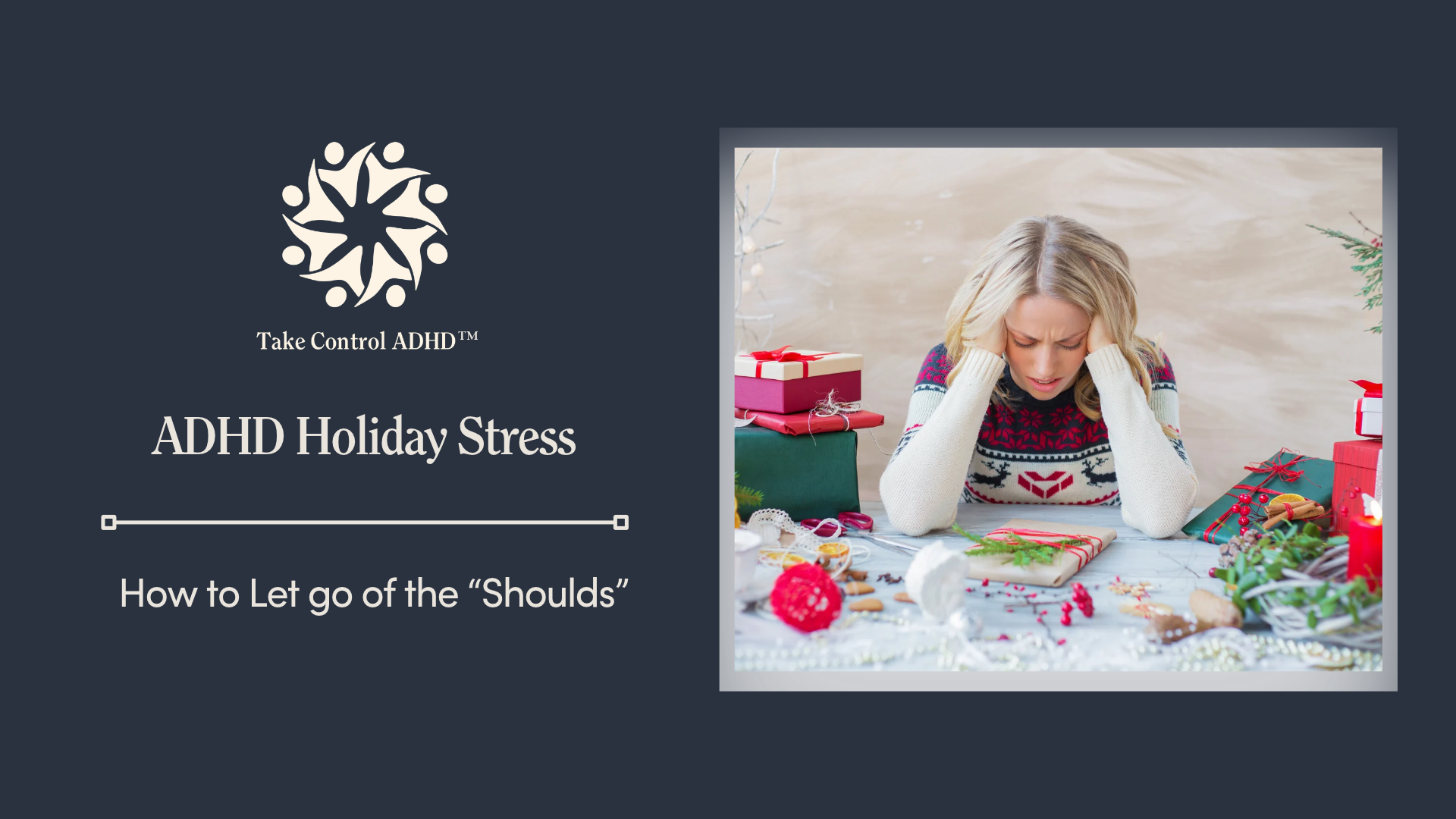
The holiday music started before Halloween ended. The decorations are up, the commercials are on, and you haven’t done a single thing yet. Somehow, you already feel behind.
If that sounds familiar, you’re carrying a lot of shoulds.
On The Holiday Shoulds Podcast, Pete and I talked about ADHD holiday stress and the expectations that make this season feel heavier than it needs to be. Here’s how to start setting some of them down.
Why do the holidays feel so stressful?
You’re not imagining it. In a 2023 American Psychological Association poll, 43% of adults said holiday stress gets in the way of enjoying the holidays, and 36% said the holidays feel like a competition.
In a November 2025 poll from the American Psychiatric Association, 41% of adults expected more holiday stress than the year before, up from 28% the year earlier. The top worries included missing someone, affording gifts, family dynamics, and loneliness.
Why are the shoulds so loud with ADHD?
Many adults with ADHD grew up being corrected over and over. That teaches you to look outside yourself to know whether you’re okay. The holidays bring that voice right to the surface.
Other ADHD traits pile on, too:
Time blindness: You picture the party, but not the shopping, cleaning, and cooking that lead up to it. Then crunch time hits.
Rejection sensitivity: Saying no, or changing a tradition, can feel like letting everyone down.
Overwhelm: You’re already busy, and now there’s a whole season of extra on top.
Not every should has to go
Some shoulds are things you love. Pete has made it clear he would never sign a permission slip that lets his wife skip her holiday pies. She loves making them, and they’re part of what makes the season feel like the season.
The question isn’t whether a should is good or bad. It’s whether it still fits this year.
How do I decide which shoulds to keep?
Start by noticing. When you think about the weeks ahead, which plans make you think “yippee,” and which make you think “oh no”? You’ll usually know right away.
Ask whose voice it is. Is this expectation yours, or did it come from a parent, a commercial, or another season of your life?
Write a holiday mission statement. In one or two sentences, name what matters most this season. For example: “This year, I want the holidays to feel calm and connected. They don’t need to be perfect.” Then use it as a filter. When a new invitation or task comes up, ask whether it fits.
Bring in self-compassion. Researcher Kristin Neff describes self-compassion as kindness instead of harsh judgment, remembering you’re not the only one struggling, and noticing your feelings without getting swallowed by them. Her research links self-compassion with more motivation, not less. Being kind to yourself doesn’t lower the bar.
Permission slips you can borrow
If a should doesn’t fit, you can keep it, scale it back, hand it off, or let it go. A few ideas:
Buy the pie instead of baking it.
Ask someone else to bring the potatoes or a side dish.
Leave the party when you’re ready. An hour still counts as showing up.
Adjust the gifts. Spend less, trade acts of service, or give everyone something you love and use yourself.
Plan a rest day after a big gathering.
Say “not this year” without a long explanation.
Make it yours
Our free companion guide, My Holiday Permission Slip, walks you through noticing your shoulds and choosing which ones to keep. It ends with a permission slip you can sign and put somewhere you’ll see it.
👉 [Download My Holiday Permission Slip]
Thank you for your time and attention.