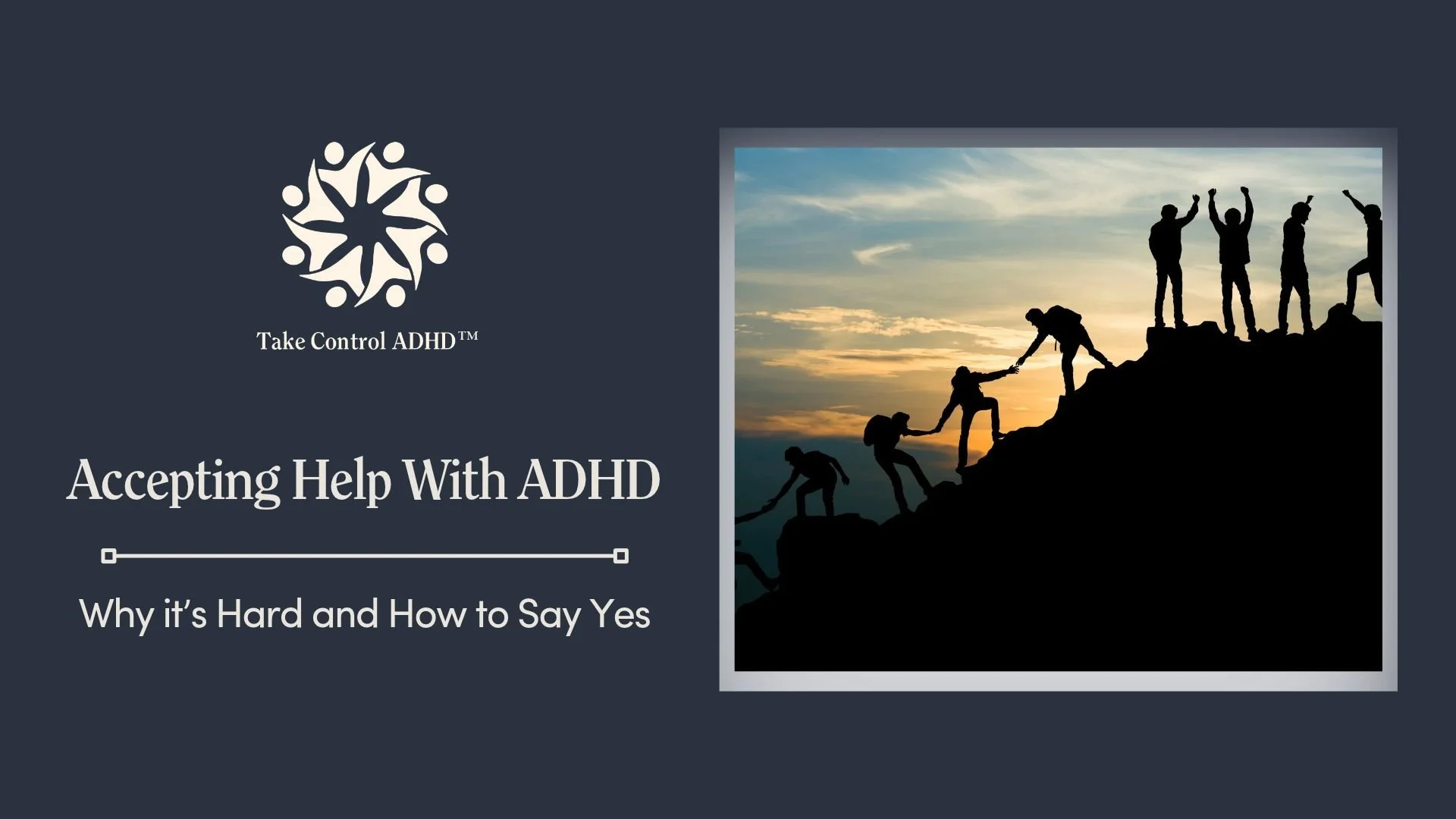
Someone offers to carry the bags, help with a project, or take something off your plate. Before you’ve even thought about it, the words are out: “No, no, I’ve got it.”
If that’s you, you’re not alone. Accepting help with ADHD can feel harder than asking for it. In episode 3310 of the podcast, Pete and I talked with James Ochoa and his son, Jules, about why, and about what makes it a little easier.
Why is accepting help so hard with ADHD?
Help you didn’t ask for can feel like a spotlight on something you missed.
James described it as the music suddenly turning suspenseful. Someone offers to help, and your first thought is, “Wait. What am I missing?” If you thought everything was fine, the offer can feel like proof that it isn’t.
There’s history behind that reaction. Many adults with ADHD grew up with people stepping in out of frustration, taking over a task because it wasn’t done fast enough or the right way. So even when help comes from a place of care, it can still feel like criticism.
That reaction isn’t limited to ADHD, either. A few years ago, my husband started organizing our attic, and I felt almost offended. My first thought was, “You don’t think I can do it?” He wasn’t trying to prove anything. He just wanted to help.
Why do I feel like I owe people when they help me?
For a lot of people, help comes with a ledger. Someone does something kind, and you spend the rest of the week figuring out how to pay them back.
Pete admitted that when his neighbor brings in his trash cans, part of him wonders whether he could just write the man a $1,000 check. It’s funny because so many of us recognize it.
James suggests shifting from indebtedness to gratitude. Instead of “Now I owe them,” try “I’m grateful they helped me.” If the feeling of debt is still there, say it out loud. More often than not, the other person will tell you they got something out of helping too.
How do I get better at receiving help?
James offered a few simple steps:
Notice it. When you feel yourself bracing against help, name it. “Here’s that feeling again.”
Get clear on what would help. If someone offers, point them to what you need most.
Speak up if it isn’t working. It’s okay to say, “This isn’t helping right now. Can we try it another way?”
Jules added a reminder that might take some pressure off: nobody does everything. Every system works because people have specialties. Letting someone help isn’t failing. It’s sharing the load.
If you live with or love someone with ADHD, Jules has one more tip for the helper. When the defenses go up, sit back, listen, and ask curious questions. Pushing harder usually builds the wall higher.
Saying yes to help this holiday season
The holidays tend to bring more offers of help than any other time of year. Someone wants to bring a side dish, wrap gifts with you, or take the kids for an afternoon so you can shop.
This season, consider saying yes to just one of those offers. You don’t need to explain or apologize. “Yes, thank you, that would really help” is enough.
A few questions to sit with
When someone offers help, what’s the first thing I feel?
Is there one thing on my holiday list I’d be relieved to share?
Who in my life helps because they want to, not because they’re keeping score?
There’s no right way to receive help. Start by noticing, and be kind to yourself while you practice.
Want to hear the whole conversation? James, Jules, Pete, and I cover it all on the podcast.
🎧 [Listen Here]
Thank you for your time and attention.