“Later” is Not a Plan: Here’s What to do Instead
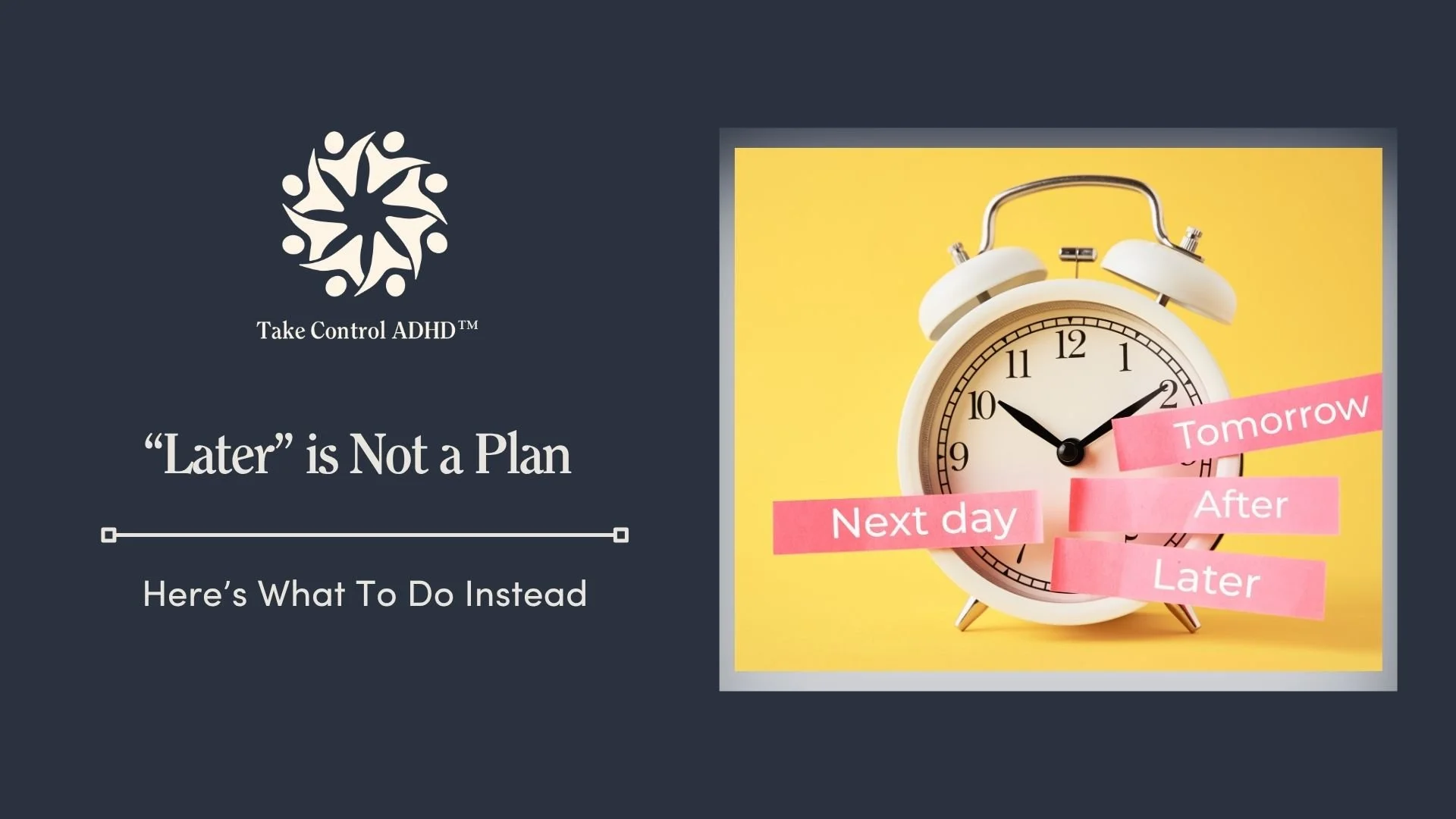
You said you'd deal with it later.
And you meant it. But later didn't come with a time, a plan, or a place on your calendar. It was just a way to move past the discomfort for now.
Here's what Ari Tuckman calls that: an energy leak.
The task isn't in your calendar, but it's in your head. It pings you in the shower. It shows up right before you fall asleep. It takes up cognitive bandwidth all day long, quietly, invisibly, relentlessly.
So what's actually happening when we say "later"?
According to Ari, there are two flavors of procrastination, and they need different solutions:
Not feeling the future — This is the ADHD brand. The deadline doesn't feel real yet, so the urgency doesn't show up until it's almost too late. By the time you feel it, it might be too late to do it well.
Avoiding the discomfort — This one's about too much feeling, not too little. Shame, guilt, dread. The task has become emotionally loaded, and your brain wants nothing to do with it.
Both feel like procrastination from the outside. But they're very different on the inside.
The solution? Specificity.
"Later" is vague. Vague things don't happen.
What actually moves the needle is making it specific:
When will you do it?
Where does it live on your calendar?
What comes right before it, so you can slide into it naturally?
Making an appointment with yourself isn't a productivity trick. It's the difference between a real decision and an empty phrase.
And if the task feels too loaded to touch?
That's the avoidance flavor, and it needs a different approach.
Rather than asking "how do I avoid feeling bad about this?" try asking: "What's the positive on the other side of doing it?"
That clogging task, the one that's been blocking everything else, once it's done, things start moving again. That feeling is real. That's worth going toward.
As Ari puts it, nobody hangs an inspirational poster that says "Don't get in trouble." We move when we're going toward something, not just running from something.
A few things worth trying this week:
Notice when you say "later" and ask yourself if you actually mean it.
If you do mean it, give it a time. Put it somewhere real.
If you don't mean it, make the actual decision: is this getting done, or is it off the list?
For the tasks you've been avoiding, find the positive on the other side and aim for that instead.
The reason productivity feels hard, as Ari says, is because it is. But you don't have to carry these open loops alone.