Rest Isn't the Reward. It’s the Requirement.
You know what to do. You've heard the advice. You've tried the strategies.
And yet, when you're tired, none of it lands. The tips feel annoying. The to-do list feels impossible. Even the smallest task starts to feel like a moral referendum.
That's not laziness. That's ADHD fatigue doing exactly what the research says it does.
What the research actually shows
Everybody gets tired. But ADHD brains get tired in a different and significantly more impactful way.
One study found that 62% of adults with ADHD meet the criteria for chronic fatigue syndrome. Not regular tiredness, chronic, compounding fatigue that stacks on top of an already-taxed executive function system.
Here's what that means in real life:
On a good day, prioritizing is hard. When you're fatigued, it's nearly impossible.
On a good day, switching tasks is a challenge. When you're depleted, it can feel like the worst thing ever.
On a good day, self-awareness helps you course-correct. When you're exhausted, reality distorts, and you stop noticing the check-ins, alarms, and anchors you put in place.
Fatigue doesn't just make things harder. It makes the strategies you rely on stop working entirely.
The guilt loop that makes it worse
Here's the part nobody talks about: the guilt you feel about resting is also taking energy.
You spend the little capacity you have left fighting yourself, believing you should push through, that you haven't done enough, that rest is something you have to earn. And that belief keeps you stuck in a loop that leaves you more exhausted than when you started.
Rest isn't the opposite of productivity. For ADHD brains, it's a condition for it.
What recovery actually looks like
It's not just sleep, though sleep matters. Real recovery is about changing gears entirely. Giving your brain something genuinely different to do.
🧩 A puzzle
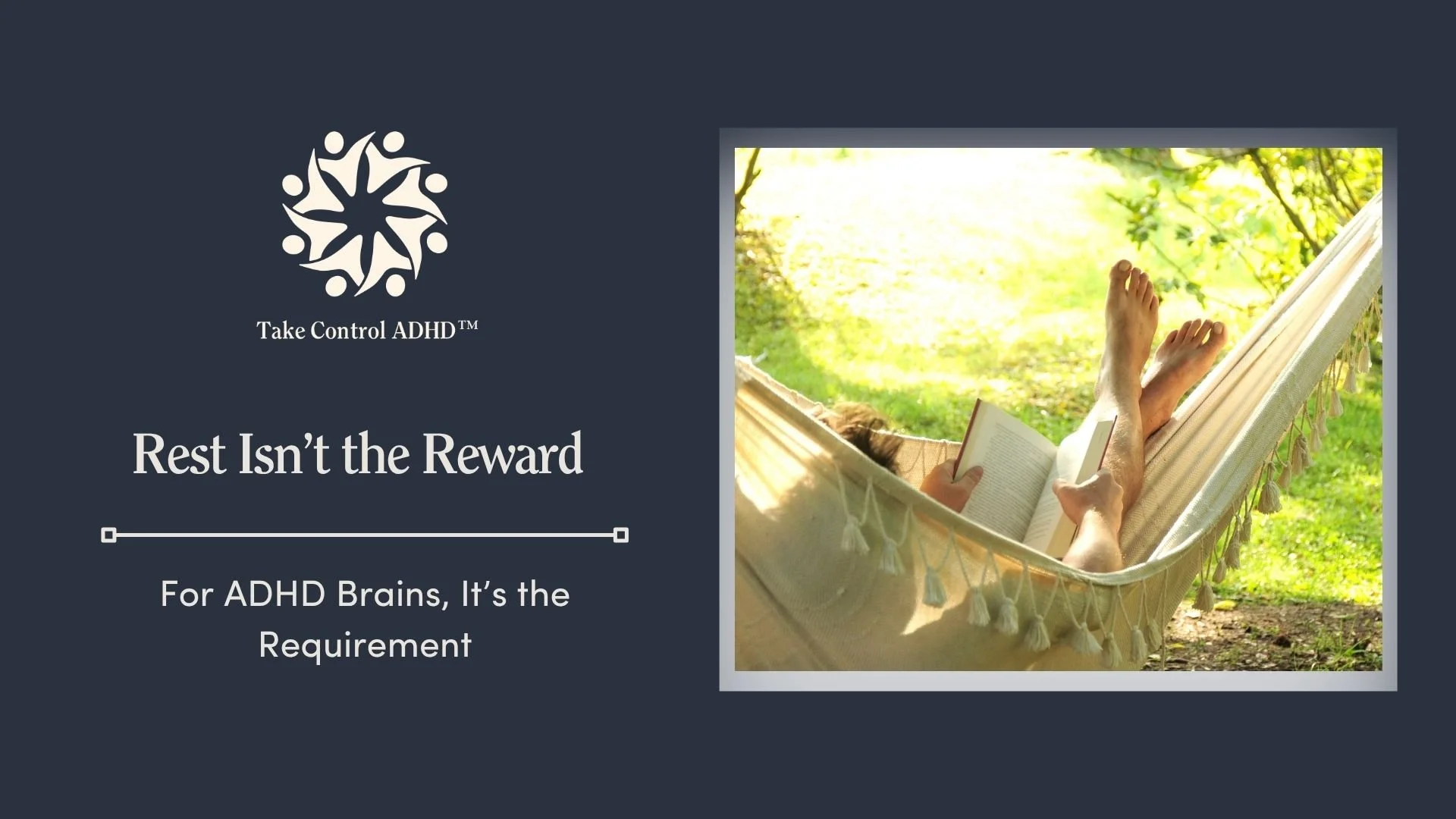
📚 A book
🎨 Something creative
🌲 A walk outside
A film, a show, anything that pulls your attention somewhere else completely
The goal isn't to stop thinking. It's to think about something different. That's how the recovery muscle gets built.
And when "I don't wanna" shows up?
Before you question the feeling, check your capacity first. "I don't wanna" is sometimes resistance. But it's also sometimes your brain telling you it needs to recover, and it deserves to be heard either way.
Rest isn't a treat. It's part of the work. 🌿