
It Wasn’t You—It Was Biology: ADHD, Hormones, and Late Diagnosis
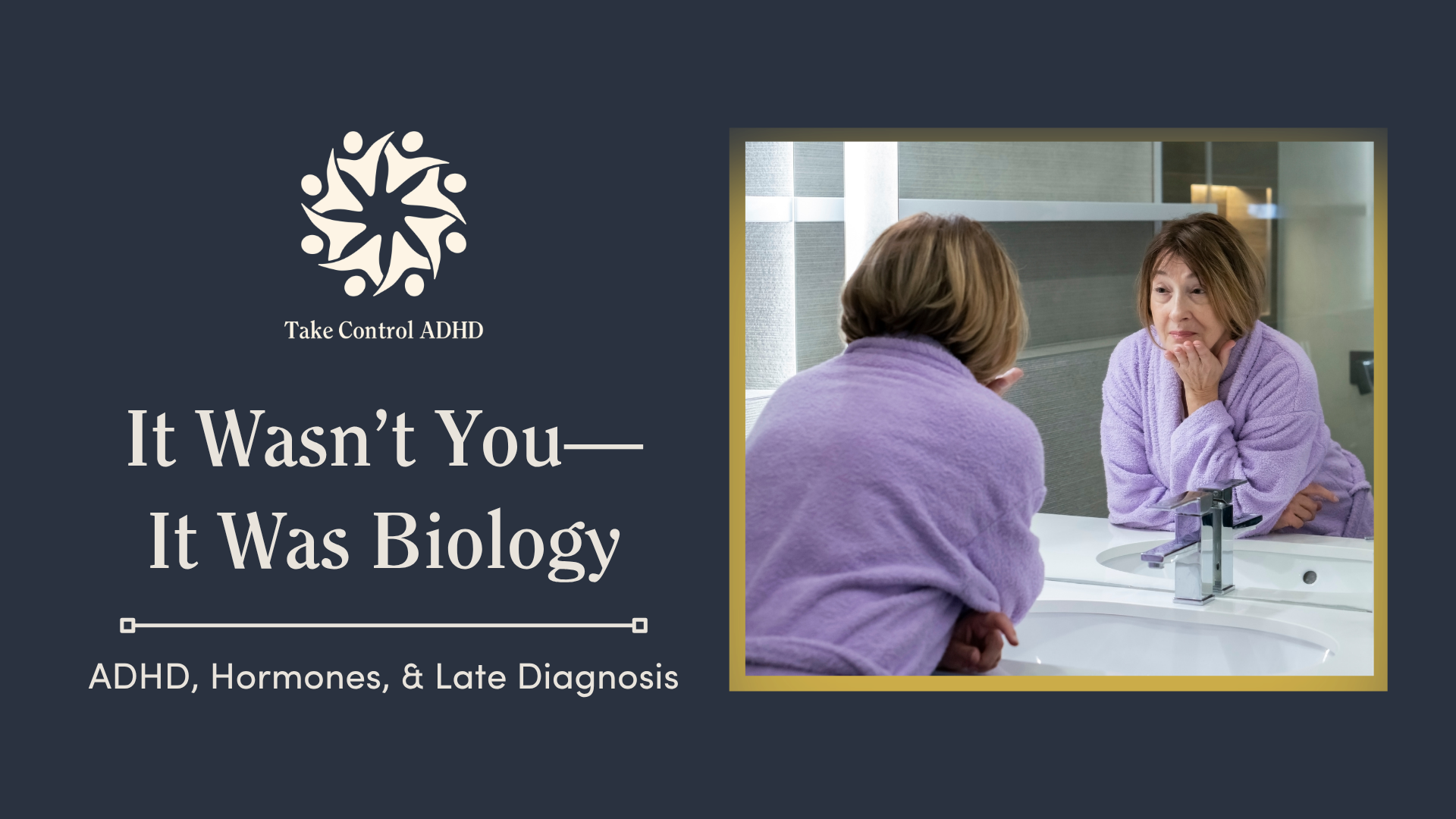
This post expresses opinion, and should not be taken as medical advice. This content is provided for informational purposes only. Everyone’s situation is different, so please consult your healthcare professional for any and all matters regarding these topics.
What if the chaos wasn’t a character flaw—but a chemistry problem nobody told you about?
For many women, it’s very common to not receive an ADHD diagnosis until midlife—or even much later. For a lot of them, it’s often perimenopause that finally blows the cover off a lifetime of coping.
Finally Making the Connection
On a recent episode of Taking Control: The ADHD Podcast, Pete and I had the pleasure of welcoming Linda Roggli—professional certified coach, award-winning author, and founder of the ADDiva Network for ADHD Women 40 and Better.
During our conversation, Linda shared that her ADHD diagnosis came in her forties, right in the thick of perimenopause. She described the moment perfectly:
“It was ADHD and it was estrogen. It wasn’t me being horrible. It wasn’t me being silly. It was that nobody knew about this hormone connection then.”
That one realization—that biology and not a broken personality was at work—was her game changing moment.
The ADHD–estrogen connection
Here’s what Linda wants every woman in this season of life to know:
You are not alone. ADHD is isolating on its own—add perimenopause and normal aging into the mix, and it can feel like you’re the only one who can’t keep it together. You’re not.
The fear around hormone therapy may be outdated. The study that scared millions of women away from estrogen therapy had serious flaws—it enrolled women already well past menopause and used older pill-form hormones. Current research suggests that starting menopausal hormone therapy (MHT) within five years of your last period carries a very different risk profile. Talk to your doctor.
The brain shrinkage piece is real—and it hits the ADHD brain where it hurts most. Brain volume naturally decreases with age, and by 65, much of that loss is concentrated in the prefrontal cortex—exactly where ADHD already struggles. Knowing this isn’t meant to scare you; it’s meant to help you advocate for yourself.
What to do with all of this
The biggest takeaway from this fantastic discussion would certainly be to advocate for yourself and speak to your healthcare provider about any and all of your concerns.
Be sure to go in ready to any medical appointments. Be prepared to ask questions as well as provide any and all of your history and symptoms. The more you provide, the better.
Finally—and most importantly—give yourself a little grace. What previously felt like personal failure may have always been biology.
You, and your health, matter.
Thank you for your time and attention,
Nikki
🎧 Listen to our full conversation with Linda Roggli on The ADHD Podcast