
Give a Scoop, Get a Scoop: Friendship Skills for Your ADHD Brain
Friendships matter—but making and keeping them can feel messy when you have ADHD.
On a recent episode of The ADHD Podcast, Pete & I welcomed back good friend of the show, Caroline Maguire, to talk with us about ADHD adults and friendships, as she is set to release her new book, Friendship Skills for Neurodivergent Adults, (available April 14th, 2026).
Caroline was able to share so many great concepts and strategies around creating new friendships as adults—especially if your brained is wired a little differently.
The underlying theme and takeaway from our discussion was this: you don’t have to change who you are, but you do need strategies that fit your brain.
Below, I have shared some of the great points and strategies Caroline shared during our conversation on the podcast:
Start by naming your friendship needs
How many close friends will help you feel socially and relationally fulfilled without feeling overwhelmed? Accept your number and stop comparing yourself or your number to others.
Define what a “good enough” connection looks like for you: weekly texts, monthly coffee, deep one-on-one conversations—whatever type of connection feels good to you—name it and claim it.
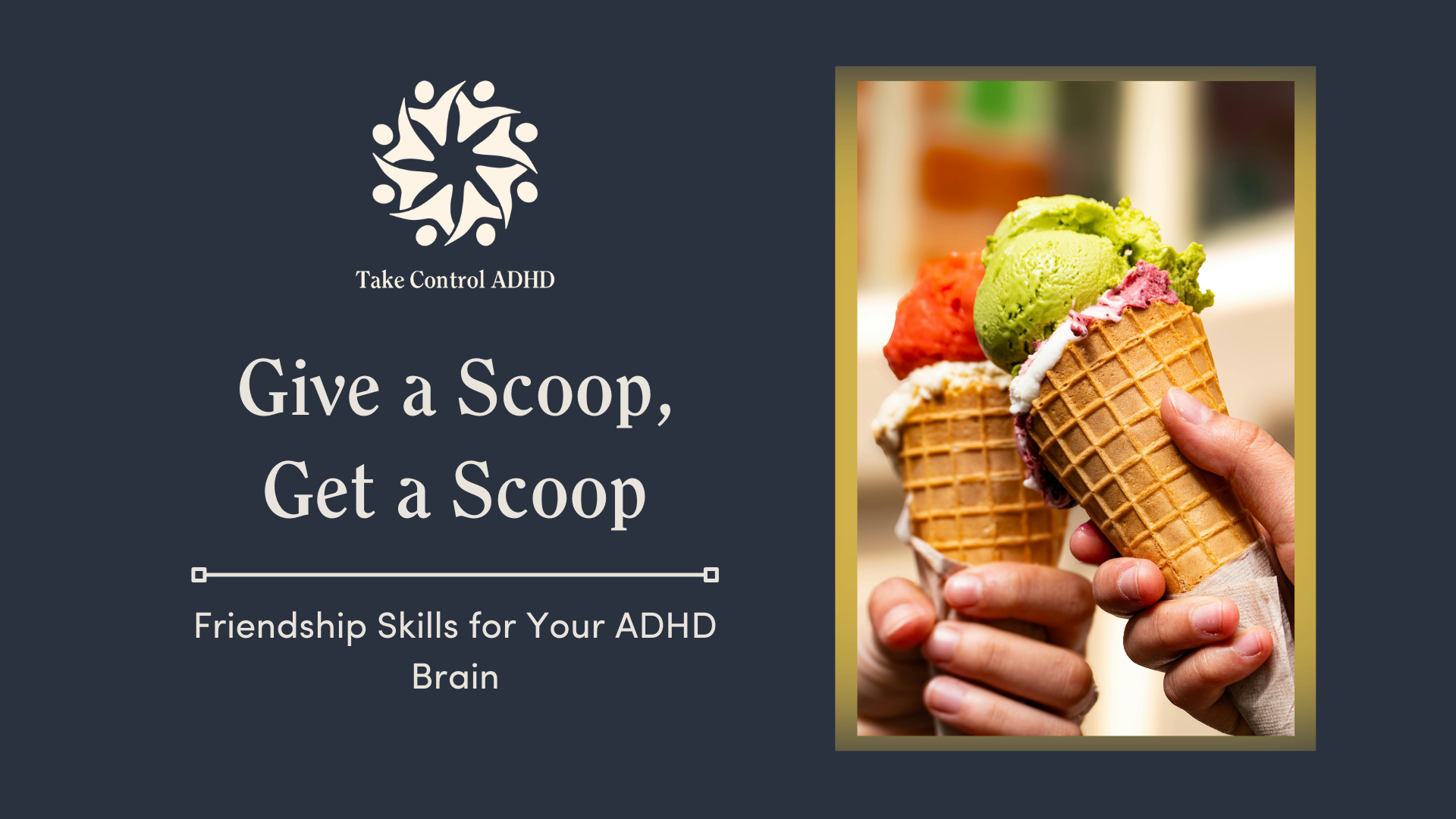
Try the “Ice Cream Scoop” method
Scoop 1: Share a small piece of yourself (a safe story, an invite), just like you are offering them a scoop of ice cream.
Wait and watch: Does the person return a scoop? Do they share something back, in return to your initial scoop? Do they show up when it matters?
Scoop 2+: Add more—only after you see they are willing to reciprocate on their side, as well. Trust grows from a healthy track record, not wishful thinking.
Practical habits you can start today
Let them know how your brain works in friendships: “I love our chats. FYI I’ll probably be quiet for the next month while I finish a project.”
Make a friendship checklist & check it any time you’re considering adding a new friend: Include things like your preference and hard lines for things like reliability, emotional support, shared values, etc.
Keep an “ice cream log”: Make a note when people reciprocate, or offer you a scoop (texts answered, help offered). Feelings in the moment can fade, but patterns tell the truth.
Friendship for adults—with or without ADHD—is hard. In the end, it’s a mix of strategy and self-compassion. Give small scoops and expect the same in return. Real friends will notice—and stick around.
Thank you for your time and attention,
Nikki
🎧 Want to hear our full conversation with Caroline Maguire? Listen HERE